
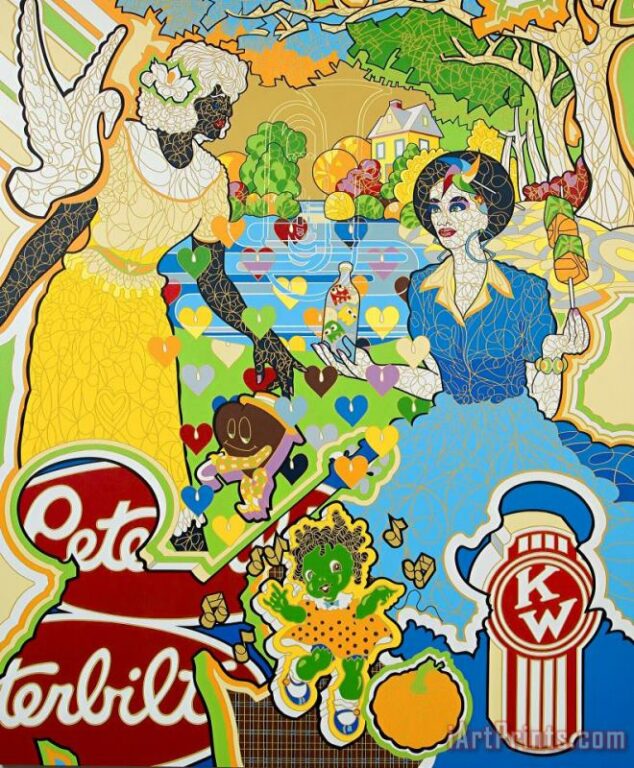
On Duty, Not Driving, 2010
Acrylic on canvas
72 × 62 in. (182.88 × 157.48 cm)
Purchase, with funds from the African American Art Alliance in honor of its twentieth anniversary M2011.16
Photo credit: John R. Glembin
© Reginald Baylor
Objective: Students will learn about different aspects of their personal identity and what it means
when we say that certain symbols or ideas can represent who we are.
Think: Have students silently observe the displayed painting for two minutes. Then, ask them questions
about what they have observed. Ask questions such as, “What do you see? Who do you see? What colors do you see? What symbols do you see? What do you think that some of these symbols could represent?” Following this discussion, read what Reginald Baylor said when discussing what each symbol means to him to the students.
Draw/Write: Give students a blank piece of paper. Have them fold this piece of paper in order to create six boxes. Then, give students 10 minutes to come up with six symbols to represent something about themselves. When the time is up, students will then be asked to write one to two sentences on a separate piece of paper that explain what each of these symbols represents or means to them.
Share: Lastly, students will be asked to share with their table groups or with the whole class what
symbols they drew, and what they wrote on their papers about how these symbols relate to who they are. This would then lead into a whole group discussion about personal identities, and how everyone has different traits that make up who they are.
Extension: In order to turn this lesson into an art activity, you could extend this activity by having
students create a collage with the symbols they used, adding all of the symbols and some new elements into one painting in order to express who they are creatively.