
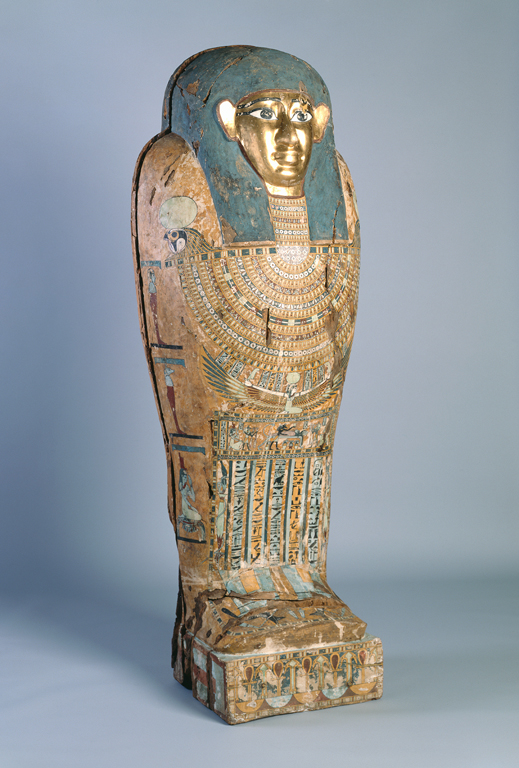
Mummy Coffin of Pedusiri, Late Dynastic (712–323 BC) or Early Greco-Roman (323 BC–AD 395) Period, 500/250 BC
Plastered, polychromed, and gilded wood
84 × 30 3/4 × 13 3/4 in. (213.36 × 78.11 × 34.93 cm)
Purchase M1967.20
Photo credit: Michael Tropea
Objective: Students will explain how beliefs about the afterlife influenced burial practices in Ancient Egypt, using evidence from artifacts.
Look: I want you to take a look at this mummy coffin. What is the first thing you notice? I want you to take a minute and then tun and talk with a partner. Go through these questions:
- Are there any colors that stand out to you?
- What symbols or images do you notice on the body?
- What do you observe about the face? Does it look real or made up?
- What are the different sections that you can identify?
Wonder: Now, I want you to take what you know and think deeper. What are questions you have about the ancient Egyptians that could lea you to a better understanding of the mummy coffin? (Give some examples but let students work in partners to think of one meaningful question.)
- Why did the ancient Egyptians decorate their coffins like this?
- Is there a person inside? What was their life like?
- What do the symbols represent? What do the hieroglyphs mean?
- Why do they use those specific colors?
You are going to do some research now. (Have books and website readily available for students to look into and find answers to their questions.)
Share: Find a different partner group and pose the question you thought of to them. I want you to allow the other group to try to answer your question. After, you may share your findings. Make sure each group gets a chance to share their discoveries.
Standard: SS.BH2.b.4 Give examples of how peoples from different cultures develop different values and ways of interpreting experiences.