
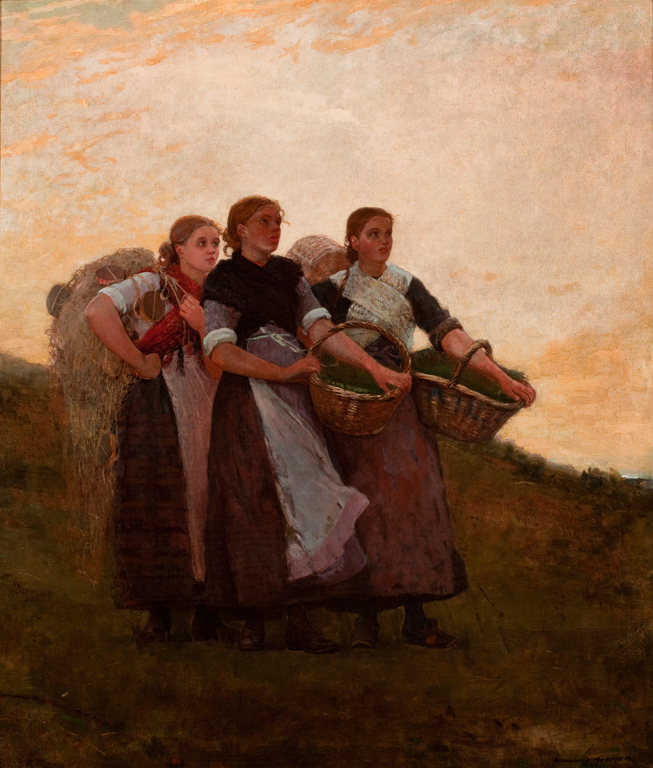
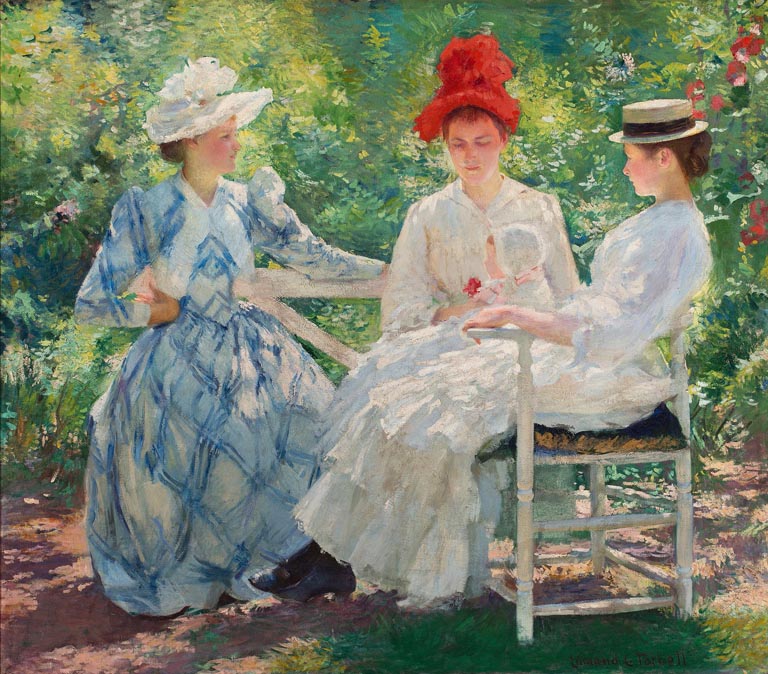
Objective: Students will compare two artworks to understand how social class, environment, and daily responsibilities shape people’s lived experiences. By examining visual evidence from both paintings, students will draw conclusions about how the women’s lives are different and why.
Look: Students quietly observe both paintings. What is happening in each artwork? What do you see the women doing? Where do you think they are?
Notice: Students identify visual evidence from each painting (facts not opinions). What are the women wearing? What objects or tools do you see? Is the setting natural or fancy?
Wonder: Students turn observations into questions and deeper thinking. I wonder what kind of life these women live. I wonder how their work or class affects their daily life. I wonder how it would feel to trade places with them.
Standards:
SS.Inq3.a.m Develop a debatable and defensible claim based upon the analysis of sources.
SS.Hist3.b.m Apply historical perspectives to describe differing viewpoints of current events.
R.6.6 Identify possible biases, the point of view, and explain how it is developed and conveys meaning in diverse texts.
SL.6.1 Engage effectively in a range of collaborative discussions (one-on-one, in groups, and teacher led) with diverse partners on topics, texts, and issues, building on others’ ideas and expressing one’s thinking clearly.