
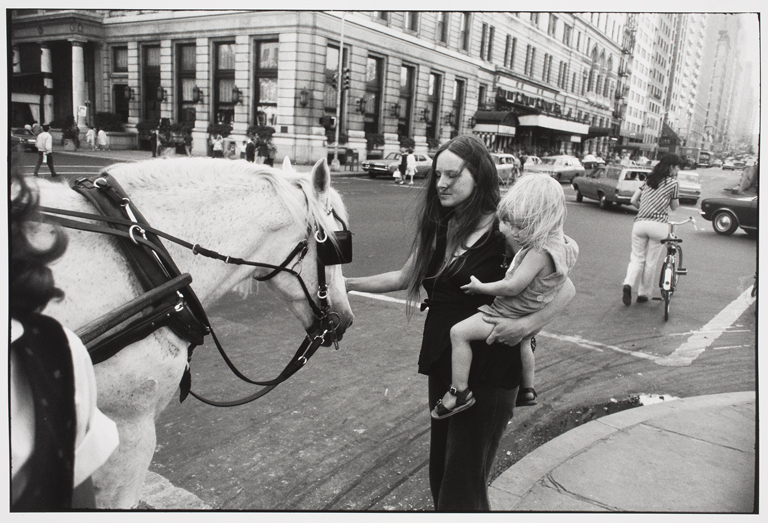
Objective: Students will analyze a 1970’s street photograph as a cultural source, identifying visual cues about gender, fashion, and public life to discuss how artists reflect social change and identity.
Materials:
- High-resolution print or projected image of Winogrand’s photograph
- Sticky notes or whiteboard space
- Journals or reflection sheets
- Optional 1970s advertisement or short feminist text excerpt
Prior Knowledge/Context: Provide brief background on 1970s America: women’s rights movements, shifts in public roles, and the rise of documentary photography. Review the “Observe → Wonder → Connect” process for analyzing visual primary sources.
Look: Show the photograph without context. Students record what they notice about the setting, people, and emotions. Prompts: What details stand out? What story might this image tell? What do you wonder about the people pictured?
Write: Reveal the title and year. Discuss how the title Women Are Beautiful might reflect or challenge cultural norms of the 1970’s. Students respond in journals: What message is Winogrand sending? How might a similar phot look if taken today?
Share: Students share one observation, one wonder, and one interpretation. Class discussion: What evidence supports your idea? How do gender and public space appear in this photo? How does photography shape how society sees women?
Extension/Connection: Students find a modern image of women in public spaces and compare tone, framing, and message to Winogrand’s.