
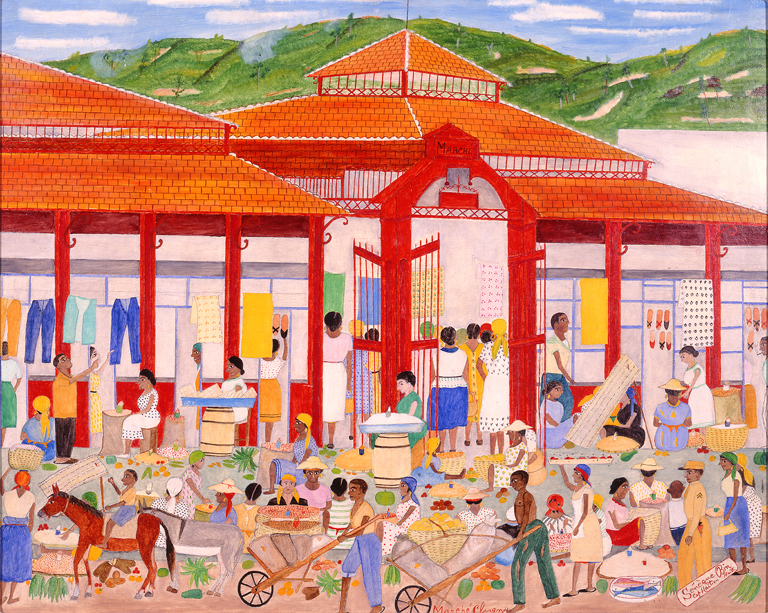
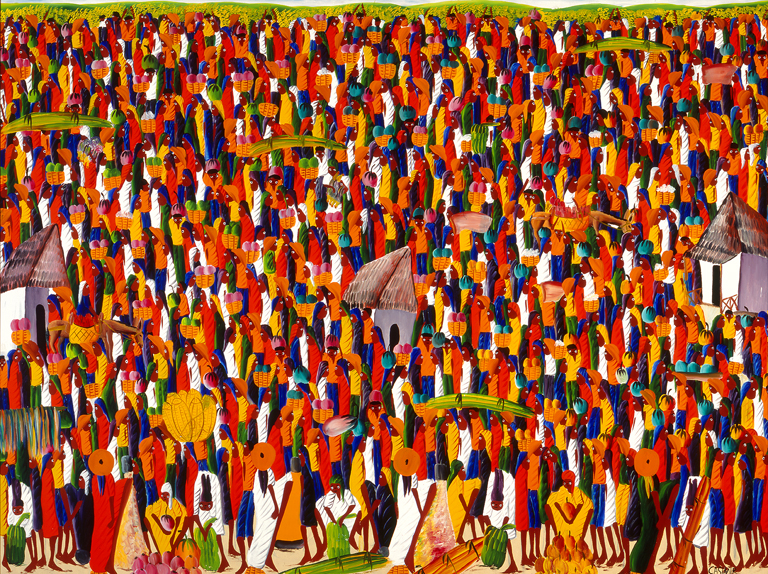
Objective: Students will compare how people from different cultures get
their food by analyzing paintings and exploring a country of their choice,
identifying similarities and differences in how communities solve the
common problem of food distribution.
Look: Take a close look at these two paintings. What do you notice they
have in common? Where do you think these people are in their community?
What clues in the paintings suggest they might be shopping? What might
they be shopping for? How do you think they got to this place?
Compare: Now, think about how this is similar or different from the way we
shop or get our food. Where do we go to buy food? What are some
similarities between the markets in these paintings and our grocery stores?
What differences do you notice? How do people in the paintings travel to the
market? How do we usually get to the store, and why might those ways be
different?
Create: Pick a country that you have visited, have family roots in, or are
simply curious about. Find out where people in that country get their food.
Do they go to a market like the one in the painting from Haiti, or do they
shop in a grocery store?
Draw a picture showing what food shopping might look like in that country.
Include details that show how people get their food. Think about what the
market looks like, what foods are being sold, or how people travel to get
there.
Then, write 4-5 sentences comparing how people in that country get their
food to how you get yours. What is one way they are alike? What is one way
they are different?
Standard: SS.BH2.a.4-5 Compare how people from different cultures solve common problems, such
as distribution of food, shelter, and social interactions.